7 Ways You Can Create Increased Time For Reading

Want to read more but just can't seem to find the time? You're not alone. There are millions out there just like you. They have great intentions to do a great many things but amid the ever increasing responsibilities and tasks of life can't find the time to get'er done. 

What I'm going to share with you today are a few handy little ways you can change all that, no matter what it is you can't find time to do. Since my personal struggle and that of many of my friends is finding time to read however, we will use reading as our backdrop. 

1. Set goals

Reading is just like anything else in life, it isn't going to just happen. Not only do you need to make reading a goal, but you have to break it down into smaller daily goals as well. So if you purpose to "read more" in 2016, you'll have to start by defining exactly what "more" is for you. But more than that, it is extremely helpful to set a goal to read a particular number of pages each day. This daily goal will help you see progress towards your overall reading goal and define exactly what you must do each day to take steps towards accomplishing it. 

If you set a goal of 10 pages per day, you'll end up reading 3650 pages in 2016. This small daily effort in pursuit of your goal, will get you there in the end. 

2. Turn off the TV

This one won't make me popular but it needs to be said, we waste too much time sitting in front of the TV. A 2014 study found that the average American age 15 or older spends roughly 2.8 hours per day watching television. Imagine if we invested that much time on reading next year. My wife and I do this from time to time for what we call reading nights and love it. After dinner we pull out our books, snuggle up on the couch and spend the evening reading.

Instead of watching The Voice or the next episode of your favorite show on Netflix, pull out a book and read for 30 minutes. I promise it will change your life. 

3. Redeem potentially wasted time

The average American commutes 28 minutes or more to and from work each day. That's potentially over five hours of wasted time each week. That might be fine if the wasted time ended there, but sadly it doesn't. How much time do you spend doing household chores such as cooking, cleaning, laundry or lawncare each week? Add those hours to the time you spend commuting each day and that's a lot of wasted time! The great thing is, it doesn't have to be. Why not redeem back this time by using it to accomplish your reading goals and learn? 

Download an audio book and let it feed your mind while doing these activites. I've personally been using this method whenever I'm in the car, mowing the lawn or helping around the house and find it an absolutely fantastic way to recapture this time. 

4. Learn to say no

As I've confessed previously, it's hard for me to say "no" when a new request comes in. But if I don't discipline myself and learn to say no, I quickly become over committed and allow an ever growing schedule to crowd out the things that are most important to me. Isn't it funny how when things get crazy the first things we drop are the things that keep our heads screwed on straight? 

Niether of us can do it all. We just aren't built for it and the more we try the more problems it causes for us. Healthy boundries are good for more important reasons than finding time to read but in learning to say no and manage your calander, you'll find that you actually have more time for the things that are most important to you. 

5. Get up earlier

 This won't be popular but it is a sure fire way to create more time to read in your schedule. Getting up even 15 minutes earlier will give you ample time to turn a few pages before heading out the door to work. 
 
 Give it a test run and see how it goes. 

6. Use your lunch break

Audio is great and I am thankful for it, but I personally prefer to do the majority of my reading with a physical book in my hand. Which means that I have to leverage the little nooks and crannies of my day to accomplish my daily reading goals. One of my favorite times to read is over my lunch break. It gives me an extra hour of reading time each day and is a key to my reading success. 

Take your lunch to work or pick up something quick and use it as a great opportunity to knock out a few pages.    

7. Involve others

It is amazing what telling someone else what you are going to do impacts your follow through. If I'm the only one who knows I was planning to do something it becomes much easier to fudge and put it off. But when we invite other people into our world and share our goals with them, we don't want to let them down and our likelyhood of following through increases dramatically. 

Share what you are reading with other people in your life and perhaps invite them to come along for the ride. 
6 Remarkable Reads That Helped Me Grow in 2015

I love to read and consume books. They are a love of mine and have been for years. Whether you read a hard copy book in your hand, digital copy on your iPad or simply listen on Audible, books are the cornerstone to learning.

Books have the potential to change lives and make great gifts for most anyone in your life. As I put together my reading plan for 2016, I took a few moments to look back over what I read over the last twelve months, and I'd like to commend the six that had the biggest impact on me this past year, to you or someone you know.

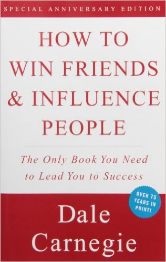
How To Win Friends and Influence People by Dale Carnege - This was perhaps the most impactful book I read in 2015. It challenged how I thought about conversations and interactions, encouraged me to readdress many of my poorly formed habits and overall changed how I look at potentially difficult conversations. After applying the principles in the book to my personal life, I have seen tremendous positive impact just from every day interactions. Few books live up to the hype, but this one certainly does.

If God Is Good: Faith in the Midst of Suffering and Evil by Randy Alcorn - Few topics are as ever present in the news and conversation of life as the questions of evil and suffering in this world. While many have attempted to pen a response, few have succeeded to the extent of Randy Alcorn's If God Is Good. Here Randy delves deep into the subject by sharing compelling stories, raising provocative questions to help you think through this profound topic and find hope. This book had a profound impact on my theology of evil and suffering, expanded my the depth of my biblical understanding on the topic and helped me find rest in the sovereign arms of God. 

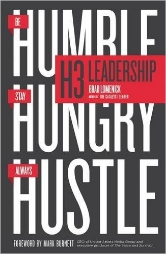
H3 Leadership: Be Humble. Stay Hungry. Always Hustle. By Brad Lomenick - I enjoyed reading this book with my friend Scott Kedersha and discussing the 20 habits all leaders need to become more effective in their roles. Whether you are leading an organization or just starting your career this book will be of great benefit to you. I was especially impacted by the concept of habit development, which has served to inspire me to take a closer look at the habits I am intentionally cultivating and those I am unintentionally allowing to form. For more on Brad Lomenick's H3 Leadership, see my review here.

Killing Floor by Lee Child - Not long ago, I would have said that I didn't like fiction writing and found it to be a waste of time. Then I found Lee Child, whose bigger than life characters and stories have fueled my return to the fiction isle of my local book store. If you're looking for a good action packed novel with a good guy bigger and meaner than the bad guys, Jack Reacher is your guy. I actually enjoyed Killing Floor so much that I read all 30 of the Jack Reacher novels this past year. 

30 Days to Understanding Your Bible by Max Anders - We read this book as part of our men's bible study this fall, and I am so glad we did. This book gives you an understanding of God's word in 30 days that will benefit you for years to come. In this short interactive book you will learn the major themes of the Old and New Testaments and the major doctrines that comprise Christianity. This is absolutely great reference guide to walk through, that helped me get a firm grip on parts of the Bible that have tripped me up for years. Putting things in perspective is immensely helpful and this great resource from Max Anders will help you do just that.

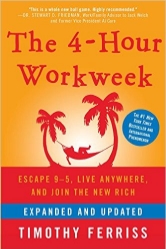
4-Hour Workweek by Tim Ferriss - Seldom to books pack the punch this one does. Each day Tim's book would encourage and excite me to take action and consider what I valued and want out of life. In this hefty little book Tim provides the perfect blend of savvy advice, action steps and resources to help you achieve true freedom in your work. Whether you are self-employed or work a regular 9-5 gig you will find something of immense value to take away.

Please note: This post contains Amazon affiliate links. Should you complete a purchase using a link from this post, at no extra cost to you I would receive a small commission on the sale. 

The Fall Lifestyle

It is the start of another crisp fall day. The birds are chirpping and flying around our backyard as the sun rises and awakens the world to another beautiful day. This week has been so lovely. Crisp cool days and warm cozy nights curled up on the couch with my wife. More than any other season I find that fall lends itself to slowing down to live and think deeply. It is such a rich time of year.

We so seldom slow down long enough to catch our breath most days but something about the cool air and warm fire invite us to rest, to read a good book, to journal and write. Life has such a sweeter rythum to it at times like this. We smile, laugh and enjoy those who mean the most to us.

Why don't we make this the regular pattern of our days? Are we that caught up in doing and having more that we can't find the time to simply be rather than do? Perhaps we do too much. Call it what you want but we must all suffer from a fear of missing out to some degree to neglect that which is so critical to our own mental, physical and relational health.

Something needs to change, and you know it too. We have to build this rythum into all four seasons and not just 30 days in December. So how do we do it? Here are a few steps each of us can take towards living the entire year in the healthy rythums the Fall season often brings: 

Say "no".

I don't know about you but saying no hurts. I feel bad about it. It is  sometimes the hardest thing for me to say. I want to say yes to everything but in doing so I say no to everything. I can't do it all and you can't either. We both need to grow in our ability to say no. Not so we do nothing but so that we can focus in the truly important things.

 Put down the phone.

Fewer things kill conversation and the ability to connect with another person like a phone. It is a constant disctraction we carry around with us everywhere we go. It has been called the new cigarette, and they just might be right. Anytime there is a lull in the conversation or awkward moment when we don't know what do to, we pull out our phones. It has become the socially acceptable thing to do and it is killing our ability to connect with real, live, humans in the same room with us and turning us into weird creatures void of social skills. I know this because I'm addicted to twitter. I follow some great people and love reading what they share and it has killed more than one evening with my wife. Let's partner together and purpose to put down our phones and engage the people around us in conversation. 

Pick up a good book.

In reading good books you are reading smart people's thoughts after them. That is to say, you are interacting with the best stuff good minds have to offer. Not only will you learn from the content but it will stimulate your mind in new ways. Deep thinkers read. You can't develop a habit of deep thinking without reading. 

Start journaling.

Writing helps us process what we learn. Remember in school when your teachers encouraged you to take notes and write things down? That wasn't just because they wanted you to stop disturbing the class, it was because the physical process of writing something down helps write it on your brain. Let's use this to our advantage and write down and process our thoughts and feelings. I have been working to develop this habit for a little over a month now and have found it to be immensly valuable. For more on my journey with journaling click here and here

Get out of town.

Many times the holiday season affords us the opportunity to travel. So many of our favorite memories are a direct result of holiday travel. Good things happen when we physically pull away from our normal rythums and surroundings. Make it your habit to at the very least withdraw on a quarterly basis. Go camping or hiking. Do something that gets you out of your normal rut and allows you time to think, reflect and enjoy life. Do this just once and you'll understand why withdrawing on a regular basis is good for the soul. 

Gather around the table.

Few things are as relaxing and enjoyable as a sit down meal with those you love and value most. The conversation and laughter are food for the soul. We do this with great regularity durring the holiday season. Why not continue this habit all year long? Call up your friends and loved ones and gather around the table. Take it slow, enjoy the meal and laugh often.   

Many of these activities have one thing in common, the practice of unplugging from the world out there in order to focus on true, deep, meaningful connections. Wether that connection is with a good book or those you love its too important to relegate to 30 days in the Fall. Join me in not allowing all the good and positive aspects of this time of year to remain trapped in one page of the calander. Let's develop these habits and enjoy life.   

Be Intentional

It feels as if someone is grabing me by the head, shaking it side to side and trying desperatly to get my attention. I must be slow to catch on because the idea of being intentional is everywhere, and I mean everywhere, for me lately. And I can understand why. 

Being intentional is key. If you want good relationships or anything else in life you have to be intentional. 

People tend to live rather unintentional lives. They just go with the flow and take what comes their way. 

This is never more true than in the area of habits. Recent studies have shown that upwards of 40% of the actions people perform each day are habits rather than actual decisions. That means that nearly half of what you do today will be a result of habits you've formed. Many of these habits have been passively allowed rather than intentionally cultivated. If there is a habit you want in your life, you have to be intentional about cultivating it in your life.  

Intentionality sets you up to lead your life, not just accept your life. Being intentional puts you in an active rather than a passive mindset as you face your day. You will be looking for how you can help, love, serve and add value to the lives of others. 

Growth doesn't just happen, you have to be intentional. You can't just throw a goal out there and expect to accomplish it, you have to be intentional about how you pursue it. Not all roads lead to the same destination. Intentional action is required.     


Weekly ExperimentIntentional Living 7 Day Experiment with John Maxwell

John Maxwell released his most recent book entitled Intentional Living this month and I immediately placed it on my reading list. In conjunction, John also released a great 7 day experiment to help you get in the habit of living intentionally. I just completed my 7 day experiment and it was truly life changing. I loved the active mindset this series got me in so much that I added a new question to my daily journal questions to ensure that I keep working to live intentionally long after my experiment has ended. Click the link above and sign up for the 7 day experiment. You'll be glad you did!

Ask good questions

As I have previously shared, some topics come up over and over again. Sometimes you just can't seem to shake certain topics. They just chase you down and pop up everywhere you go.

My most recent hound has been the importance of asking great questions.

It seems that no matter where I go, what I read or what I listen to it keeps cropping up in new and fresh ways. However it appears, the truth remains. 

Asking good questions is perhaps the most important habit / skill you can develop.

Why is asking good questions important? Asking good questions is important for at least three reasons:

1. Cultivating a learning mentality. A learning mentality is humbling because you have to admit that you don't know it all. However, it can be the first step towards unlocking new doors in your life. Everyone has something they can teach you, and asking good questions is how you figure out what it is. Ask questions that not only help you learn more about a particular person, but that also help you grow. Are you facing a major issue in your life? Is there a particular situation you're just not sure how to handle? Ask good questions of those around you.

2. Improves your relationships. Developing the habit of asking people really good questions shows people that they matter to you. One of the best ways you can show someone their value to you, is to ask their opinion. Dig deep in to who they are, what makes them tick, and what's going on deep inside their heart. It's quite difficult to dislike someone you've spent the time truly getting to know. Inevitably you will find common ground and something to appreciate about them. When you being to hold others in esteem and take a true interest in them, they will return the favor and take a deeper interest in you. As you esteem others, your value in their life will increase as well. There is no better example of this than marriage. Want to know one of the best secrets to having a great marriage? Ask your spouse intentional questions that help you learn more about them, and that communicate to them that you value your relationship. There isn't a relationship in your life that couldn't benefit from this type of intentional questioning.

3. Separates you from the crowd. You don't stand out from the crowd by being the guy with all the answers. Everyone knows that guy is a fake, and quite honestly no one wants to be around them. No, you stand out by the quality of the questions you ask. Ask really good questions at work, and then actually listen to the responses people give. Do that and you'll stand out just fine.

As I am growing in this area I also want to help you develop the habit of asking good questions. Below are 30 questions that can help you get started. Pick one or two questions and ask them over dinner tonight with your family, friends or roommates.  

  1. What's the best advice you've received, who gave it to you & how did it help you.
  2. What's the best advice you've ever given someone else?
  3. If you could do one thing for everyone in the world what would it be?
  4. What single event in your life had the greatest impact on you?
  5. What advice would you give your 20 year old self?
  6. You walk into a bar, what do your order from the bartender?
  7. Who are you reading?
  8. Who are you learning from?
  9. What have you learned in the past year that has impacted your life the most?
  10. What historical figure do you resonate with most?
  11. What is one thing that you've learned in your life that you feel most people overlook?
  12. How do you lead your family?
  13. What single person has had the biggest impact on you?
  14. What single person has had the biggest impact on your leadership?
  15. What single person has had the biggest impact on how you lead your family?
  16. How do you set goals? What are you currently working to achieve?
  17. What is the most impactful book you have ever read?
  18. What book do you most often give as a gift?
  19. In what areas are you currently working to improve?
  20. When you think of the word successful, who is the first person to come to mind?
  21. What are your daily rituals?
  22. What purchase of $100 or less has most positively impacted your life?
  23. What are you best at?
  24. Something people would be surprised to learn about you?
  25. What one book would you recommend everyone read?
  26. Do you have a morning routine? If so, what is the most important thing you do to start each day?
  27. The Pareto Principle states, that 80% of your results come from 20% of your efforts, what is your 20%?
  28.  What gets you out of bed in the morning? What are you most passionate about?
  29. What rejuvenates your soul? What places or activities help you recharge?
  30. When do you feel most productive?